Overview
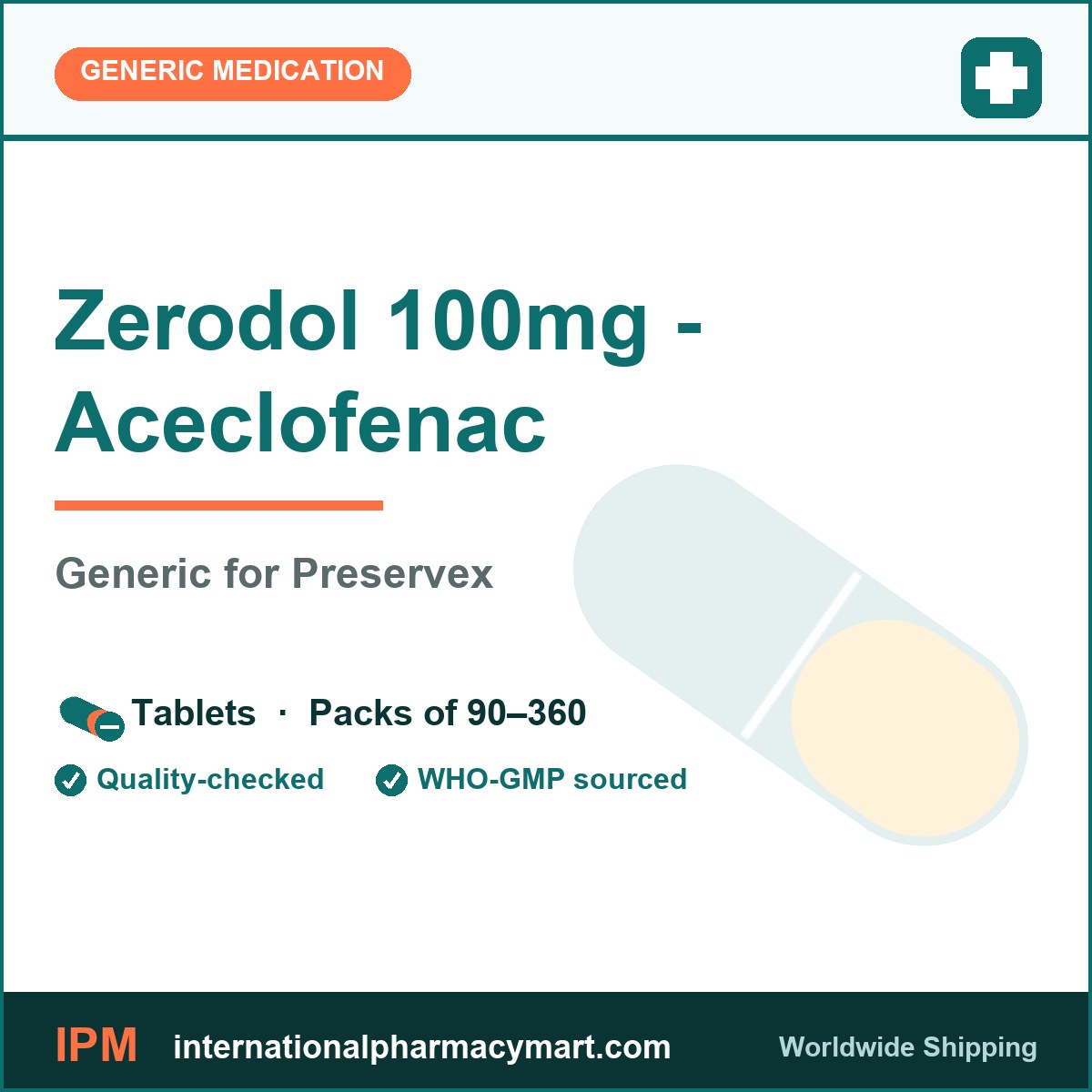
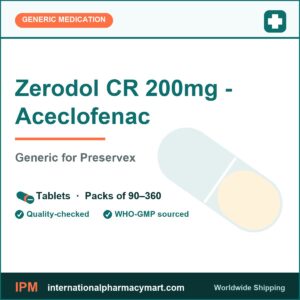
Zerodol 100mg is a tablet that contains aceclofenac 100mg. It is made by Ipca Laboratories Ltd and is a generic version of Preservex. Aceclofenac is a non-steroidal anti-inflammatory drug (NSAID) that relieves pain and inflammation.
- Aceclofenac 100mg per tablet
- Generic version of Preservex
- Relieves pain and inflammation in arthritis
- Usually one tablet morning and evening, with or after food
Uses
According to the official product information, aceclofenac is used for the relief of pain and inflammation in:
- Osteoarthritis
- Rheumatoid arthritis
- Ankylosing spondylitis
See more pain relievers.
How it works
Aceclofenac is a non-steroidal agent with anti-inflammatory and pain-relieving properties. It works mainly by blocking the cyclo-oxygenase (COX) enzyme, which reduces the body’s production of prostaglandins — chemicals involved in pain, swelling and inflammation.
Dosage
Take Zerodol exactly as your doctor prescribes. The doses in the official product information are:
- Adults: 200mg a day, taken as two separate 100mg doses — one tablet in the morning and one in the evening.
- Take it preferably with or after food, with enough liquid.
- Use the lowest effective dose for the shortest time needed to control symptoms.
- Liver problems: the dose should be reduced; the suggested starting dose is 100mg a day.
- Mild kidney problems: no dose change is needed, but care is advised.
- Older people: no dose change, but they are more likely to have serious side effects and should be checked regularly for stomach bleeding.
- Children: not recommended.
Safety warning
- Do not take aceclofenac if you: are allergic to it; have an active or repeated stomach ulcer or bleeding; have had stomach bleeding or a perforation from an NSAID; have had asthma, runny nose, swelling or hives after aspirin, ibuprofen or other NSAIDs; have liver or kidney failure; have heart failure, heart disease (angina, heart attack), poor circulation in the legs, or stroke/mini-stroke; have active bleeding or a bleeding disorder; or are in the last 3 months of pregnancy.
- Stomach bleeding: bleeding, ulcers or perforation can happen at any time, with or without warning, and can be fatal. The risk is higher with higher doses, older age and a past ulcer. Stop and get help if you have black stools or vomit blood.
- Heart and blood vessels: aceclofenac is broken down to diclofenac, which is linked to a small increase in the risk of heart attack or stroke. It can also cause fluid retention and swelling. Use with care if you have high blood pressure or heart risk factors.
- Kidneys and liver: NSAIDs can worsen kidney function and may affect the liver. Long-term use needs regular kidney, liver and blood tests.
- Skin: very rare but serious skin reactions (Stevens-Johnson syndrome, toxic epidermal necrolysis) have been reported, mostly in the first month. Stop at the first sign of a rash, mouth sores or an allergic reaction.
- Asthma: NSAIDs can trigger breathing problems in people with asthma.
- Lupus (SLE) or mixed connective tissue disease: higher risk of aseptic meningitis.
- Avoid during chickenpox (risk of serious skin infections).
- May cause dizziness, drowsiness, tiredness or blurred vision — if affected, do not drive or use machines.
Side effects
Common side effects (up to 1 in 10 people) include:
- Indigestion (dyspepsia)
- Stomach pain
- Nausea and vomiting
- Diarrhea, gas, constipation
- Dizziness, headache, sleepiness
- Raised liver enzymes
- Itching, rash
- Swelling (edema), tiredness
- High blood pressure
- Ringing in the ears, vertigo
Less common or rare effects include stomach ulcer or bleeding, black stools, vomiting blood, gastritis, mouth ulcers, liver injury or jaundice, heart failure, palpitations, wheezing (bronchospasm), hives or face swelling, low blood counts, kidney problems and severe skin reactions. Get medical help straight away for any serious symptom.
Interactions
- Other NSAIDs, including aspirin and COX-2 inhibitors: avoid — more stomach side effects and bleeding.
- Corticosteroids, antiplatelet medicines and SSRI antidepressants: higher risk of stomach ulcers or bleeding.
- Blood thinners such as warfarin: their effect may be increased; close monitoring is needed.
- Blood pressure medicines (ACE inhibitors, ARBs) and diuretics: their effect may be reduced and the risk of kidney problems goes up, especially in older or dehydrated people.
- Lithium, digoxin and methotrexate: their levels or toxicity may increase.
- Cyclosporine and tacrolimus: higher risk of kidney damage.
- Quinolone antibiotics: possible higher risk of seizures.
- Zidovudine: higher risk of blood toxicity.
- Mifepristone: NSAIDs should not be used for 8–12 days after it.
- Diabetes medicines: rare reports of high or low blood sugar; the dose may need adjusting.
Tell your doctor about all the medicines, vitamins and herbal supplements you take.
Pregnancy & breastfeeding
Do not use aceclofenac in the last 3 months (third trimester) of pregnancy. In the first 6 months it should only be used if clearly needed, at the lowest dose for the shortest time; from week 20 NSAIDs can affect the baby’s kidneys and heart vessels. There is no information on whether aceclofenac passes into breast milk, so it should be avoided while breastfeeding unless the benefit clearly outweighs the risk. Aceclofenac may reduce female fertility and is not recommended for women trying to become pregnant.
Storage
Do not store above 30°C (86°F). Keep out of the reach of children.
Pack sizes & prices
| Pack | Price per tablet | Pack price |
|---|---|---|
| 90 Tablets | $0.69 | $62.10 |
| 180 Tablets | $0.65 | $117.00 |
| 240 Tablets | $0.59 | $141.60 |
| 360 Tablets | $0.50 | $180.00 |
See our shipping policy for delivery times and costs, and how ordering works. Browse all medications.
FAQs
Is Zerodol 100mg the same as Preservex?
Both contain aceclofenac 100mg as the active ingredient. Zerodol is made by Ipca Laboratories; Preservex is the brand made by Almirall.
How do I take Zerodol 100mg?
The usual adult dose is one 100mg tablet in the morning and one in the evening (200mg a day), preferably with or after food. Use the lowest dose that works for the shortest time needed.
Is aceclofenac a painkiller or an anti-inflammatory?
Both. Aceclofenac is a non-steroidal anti-inflammatory drug (NSAID) that relieves pain and reduces inflammation.
Can I take it with ibuprofen or aspirin?
No. Taking aceclofenac with other NSAIDs, including aspirin and COX-2 inhibitors, should be avoided because it raises the risk of stomach bleeding and other side effects.
Can I take aceclofenac during pregnancy?
It must not be used in the last 3 months of pregnancy. Earlier in pregnancy it should only be used if clearly needed, at the lowest dose for the shortest time. Ask your doctor first.
Can children take Zerodol 100mg?
No. Aceclofenac is not recommended for children because there are no clinical data in this age group.
Source: UK Summary of Product Characteristics for Preservex 100 mg film-coated tablets (aceclofenac), Almirall, on the electronic medicines compendium (emc) (text revised 03/2023). Aceclofenac is not approved by the US FDA. This page is for information only and does not replace advice from your doctor or pharmacist.
Reviews
There are no reviews yet.