
Overview
Zerodol MR is a combination tablet made by Ipca Laboratories Ltd. Each tablet contains aceclofenac 100mg and tizanidine 2mg. It is used for the treatment of pain due to muscle spasm.
- Aceclofenac 100mg — anti-inflammatory painkiller (NSAID)
- Tizanidine 2mg — muscle relaxant (as in Zanaflex)
- May cause drowsiness
- Take only as your doctor prescribes
Uses
Zerodol MR is used for pain due to muscle spasm. According to each ingredient’s official product information:
- Aceclofenac relieves pain and inflammation in osteoarthritis, rheumatoid arthritis and ankylosing spondylitis.
- Tizanidine is a muscle relaxant used in the US to treat spasticity (muscle stiffness and tightness) in adults.
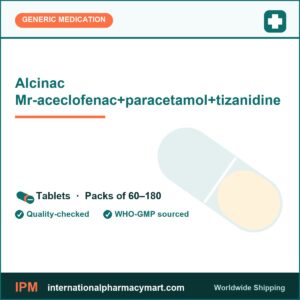
See also Alcinac MR (with acetaminophen) and Zerodol 100mg, or browse more pain relievers.
How it works
- Aceclofenac blocks the cyclo-oxygenase (COX) enzyme, which reduces the body’s production of prostaglandins — chemicals involved in pain, swelling and inflammation.
- Tizanidine is a central alpha-2-adrenergic agonist: it acts on the nervous system to relax tight muscles.
Dosage
Take Zerodol MR exactly as your doctor prescribes. Important limits from each ingredient’s official label:
- Aceclofenac: the usual adult dose is 200mg a day (each tablet has 100mg, so 200mg is the amount in 2 tablets). Use the lowest effective dose for the shortest time needed.
- Tizanidine: take it the same way each time, either always with food or always without, because food changes how much is absorbed. Do not stop suddenly — your doctor will lower the dose slowly.
- Liver or kidney problems and older people: lower doses may be needed; ask your doctor.
- Children: aceclofenac is not recommended for children.
Safety warning
- Do not take Zerodol MR if you take fluvoxamine or ciprofloxacin (strong CYP1A2 inhibitors) — this can cause a dangerous drop in blood pressure and severe drowsiness.
- Do not take it if you: are allergic to any ingredient; have an active or repeated stomach ulcer or bleeding; have had stomach bleeding or a perforation from an NSAID; have had asthma, runny nose, swelling or hives after aspirin, ibuprofen or other NSAIDs; have liver or kidney failure; have heart failure, heart disease, poor circulation in the legs, or stroke/mini-stroke; or are in the last 3 months of pregnancy.
- Low blood pressure and fainting (tizanidine): stand up slowly, especially if you also take blood pressure medicines.
- Drowsiness: tizanidine can cause sleepiness; alcohol, sleeping pills, benzodiazepines and opioids make it worse. Do not drive or use machines if affected.
- Liver: tizanidine can cause liver injury; your doctor may check liver tests. NSAIDs can also affect the liver and kidneys.
- Hallucinations: tizanidine has been linked to hallucinations; tell your doctor if you see or believe things that are not real.
- Stomach bleeding (aceclofenac): can happen at any time, with or without warning, and can be fatal. Stop and get help if you have black stools or vomit blood.
- Heart and blood vessels: aceclofenac is broken down to diclofenac, which is linked to a small increase in the risk of heart attack or stroke.
- Skin: very rare but serious skin reactions have been reported with NSAIDs. Stop at the first sign of a rash, mouth sores or an allergic reaction.
Side effects
The most common side effects of tizanidine are:
- Dry mouth
- Sleepiness
- Weakness or tiredness
- Dizziness
Common side effects of aceclofenac include indigestion, stomach pain, nausea, diarrhea, dizziness and raised liver enzymes. Less common or rare effects include low blood pressure, slow heartbeat, vomiting, rash, swelling (edema), stomach ulcer or bleeding, liver problems or jaundice, kidney problems and severe skin or allergic reactions. Get medical help straight away for any serious symptom.
Interactions
- Fluvoxamine, ciprofloxacin (strong CYP1A2 inhibitors): must not be used together.
- Other CYP1A2 inhibitors — e.g. zileuton, amiodarone, mexiletine, propafenone, verapamil, cimetidine, famotidine, acyclovir, ticlopidine and birth control pills: avoid; may cause low blood pressure, slow heartbeat or excessive drowsiness.
- Alcohol and other sedatives (benzodiazepines, opioids, tricyclic antidepressants): more drowsiness.
- Other NSAIDs, including aspirin, ibuprofen and naproxen: avoid — more stomach side effects and bleeding.
- Blood pressure medicines and other alpha-2 agonists (such as clonidine): blood pressure may drop further; NSAIDs may also reduce their effect and raise the risk of kidney problems.
- Blood thinners such as warfarin: higher risk of bleeding; close monitoring is needed.
- Corticosteroids and SSRI antidepressants: higher risk of stomach ulcers or bleeding.
- Lithium, digoxin, methotrexate, cyclosporine and tacrolimus: levels or kidney toxicity may increase.
Tell your doctor about all the medicines, vitamins and herbal supplements you take.
Pregnancy & breastfeeding
Do not use aceclofenac in the last 3 months (third trimester) of pregnancy, and earlier only if clearly needed. There are no adequate data on tizanidine in pregnant women, and in animal studies it harmed the unborn young. It is not known whether aceclofenac or tizanidine pass into human breast milk. If you are pregnant, planning a pregnancy or breastfeeding, ask your doctor before use.
Storage
Store below 30°C (86°F). Keep out of the reach of children.
Pack sizes & prices
| Pack | Price per tablet | Pack price |
|---|---|---|
| 60 Tablets | $1.55 | $93.00 |
| 90 Tablets | $1.49 | $134.10 |
| 120 Tablets | $1.40 | $168.00 |
| 180 Tablets | $1.27 | $228.60 |
See our shipping policy for delivery times and costs, and how ordering works. Browse all medications.
FAQs
What is in Zerodol MR?
Each tablet contains aceclofenac 100mg and tizanidine 2mg. It is made by Ipca Laboratories.
What is the difference between Zerodol MR and Alcinac MR?
Alcinac MR (by Leeford) also contains acetaminophen (paracetamol) 325mg. Zerodol MR has only aceclofenac and tizanidine.
Will Zerodol MR make me drowsy?
It can. Tizanidine often causes sleepiness, dizziness and weakness, and alcohol makes this worse. Do not drive or use machines until you know how it affects you.
Can I take it with ciprofloxacin or fluvoxamine?
No. Tizanidine must not be taken with strong CYP1A2 inhibitors such as fluvoxamine or ciprofloxacin — they can cause a big drop in blood pressure and severe drowsiness.
Can I take it with ibuprofen or aspirin?
No. Aceclofenac is an NSAID, and taking it with other NSAIDs such as ibuprofen, naproxen or aspirin raises the risk of stomach bleeding and other side effects.
Can I stop taking it suddenly?
Talk to your doctor first. Stopping tizanidine suddenly, especially after high doses for a long time, can cause a rebound rise in blood pressure, a fast heartbeat and muscle stiffness; the dose should be lowered slowly.
Sources: aceclofenac — UK Summary of Product Characteristics for Preservex 100 mg tablets on the electronic medicines compendium (emc); tizanidine — US prescribing information for Zanaflex (DailyMed). This page is for information only and does not replace advice from your doctor or pharmacist.

Reviews
There are no reviews yet.