


Overview
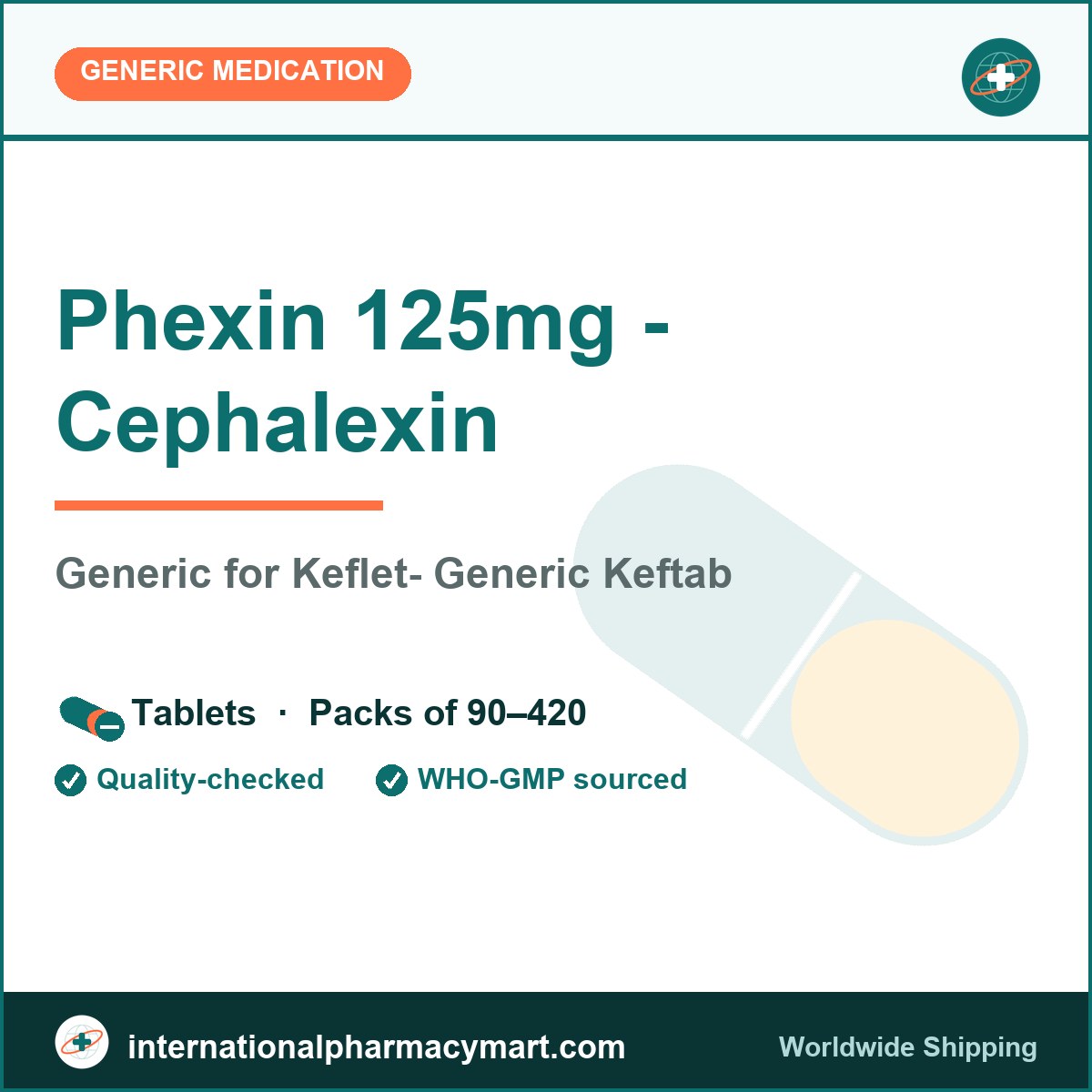
Phexin Kid Tablet DT contains cephalexin (cefalexin) 125mg. It is made by GlaxoSmithKline. It is a first-generation cephalosporin antibiotic given to children for bacterial infections. Cephalexin is sold in the US as Keftab and Keflet.
- Cephalexin 125mg per tablet
- 10 dispersible tablets per strip
- Dissolve in water
- For children’s bacterial infections
- Give the full course
Uses
- Bacterial infections: of the ear, nose, throat, tonsils, lungs and skin. It may also be prescribed as a second-line treatment for urinary tract infections. It kills the bacteria causing the infection; your child usually feels better within a few days.
- Urinary tract infections (UTIs).
- Superficial pyoderma: bacterial infections on the surface of the skin.
See more antibiotics.
How it works
Cephalexin is a cephalosporin antibiotic. It stops bacteria from building their protective cell walls by binding to proteins needed to make peptidoglycan, a key part of the wall. The weakened wall breaks and the bacteria die.
Dosage
Give Phexin 125mg in the dose and for as long as the doctor prescribes. The dose depends on the infection being treated.
- How: dissolve the tablet in a glass of water before giving it. It can be given with or without food — with food if it upsets the stomach.
- How often: it is usually given three times a day, but this depends on the type and severity of the infection. Follow the dose, times and way the doctor prescribes.
- Evenly spaced: take the doses at evenly spaced times, as the doctor prescribes.
- Zinc: keep a gap of at least 3 hours between cephalexin and zinc.
- Do not skip doses and finish the full course, even if symptoms improve.
Safety warning
- Allergy: tell the doctor about any allergy to antibiotics. Stop it and contact the doctor straight away for a rash, itchy skin, swelling of the face or mouth, or difficulty breathing.
- Tell the doctor your child’s full medical history, including allergies, heart problems, blood disorders, birth defects, lung, stomach or skin problems, and liver or kidney problems.
- Diarrhea: give plenty of water. Contact the doctor if it lasts more than 4 days, is severe and watery, or contains blood.
- Only for this infection: never save the medicine for a future illness.
- Kidney: use with caution in severe kidney disease; the dose may need to change. Liver: safe if prescribed; no dose change is recommended — but ask the doctor first in severe liver disease.
- Diarrhea: tell the doctor if it does not stop or if there is blood in the stools.
- Driving: it does not usually affect the ability to drive.
- Alcohol: avoid it — it may increase side effects.
Side effects
Side effects are usually mild and go away on their own. They can include:
- Diarrhea
- Nausea
- Vomiting
- Indigestion
- Stomach pain
- Mild skin rash
Tell the doctor if they get worse or do not go away.
Interactions
- Typhoid vaccine (Vi polysaccharide): cephalexin may make it work less well.
- Inactivated cholera vaccine: do not take it from two weeks before until at least 10 days after cephalexin — ask the doctor.
- Zinc: it may lower cephalexin levels — keep a gap of at least 3 hours.
Tell the doctor about all the medicines being taken.
Pregnancy & breastfeeding
Pregnancy: it is generally considered safe if prescribed. Animal studies show no harm, but human studies are limited.
Breastfeeding: use with caution. Breastfeeding should be paused until treatment is finished and the medicine has left the body — talk to your doctor.
Storage
Store as directed on the pack. Keep out of the reach of children.
Pack sizes & prices
| Pack | Price per tablet | Pack price |
|---|---|---|
| 90 Tablets | $0.60 | $54.00 |
| 180 Tablets | $0.55 | $99.00 |
| 260 Tablets | $0.53 | $137.80 |
| 420 Tablets | $0.50 | $210.00 |
See our shipping policy for delivery times and costs, and how ordering works. Browse all medications.
FAQs
What if my child vomits after a dose?
If your child vomits within 30 minutes of taking it, give the same dose again. Do not give a double dose if it is almost time for the next one.
What if I give too much by mistake?
A single extra dose is unlikely to do harm, but speak to a doctor straight away if you think you have given too much.
Can it cause serious side effects?
Rarely. These may include persistent vomiting, kidney problems, allergy, severe diarrhea and severe stomach or bowel infections. Contact your child’s doctor if any of these happen.
What are white patches in the mouth?
White patches inside the mouth and throat after long use may be a fungal infection. Contact your doctor right away.
Can it cause diarrhea?
Yes. It can affect the helpful bacteria in the stomach and intestines. Diarrhea should stop when the course ends. Tell the doctor if it does not stop or if there is blood in the stools.
Can I stop when the symptoms are better?
No. Finish the full course — symptoms may improve before the infection is fully cured, and stopping early can make it come back.
What if it does not work?
Talk to the doctor if it does not seem to work, if there is no improvement after the full course, or if symptoms get worse. The doctor may change the dose or switch to another medicine.
Does it work for colds or flu?
No. Colds and flu are caused by viruses, and this medicine works only against bacteria.
Source: product information for Phexin Kid Tablet DT (cefalexin 125mg, GlaxoSmithKline Pharmaceuticals). Always read the leaflet in your pack. This page is for information only and does not replace advice from your doctor or pharmacist.


Reviews
There are no reviews yet.