
Overview
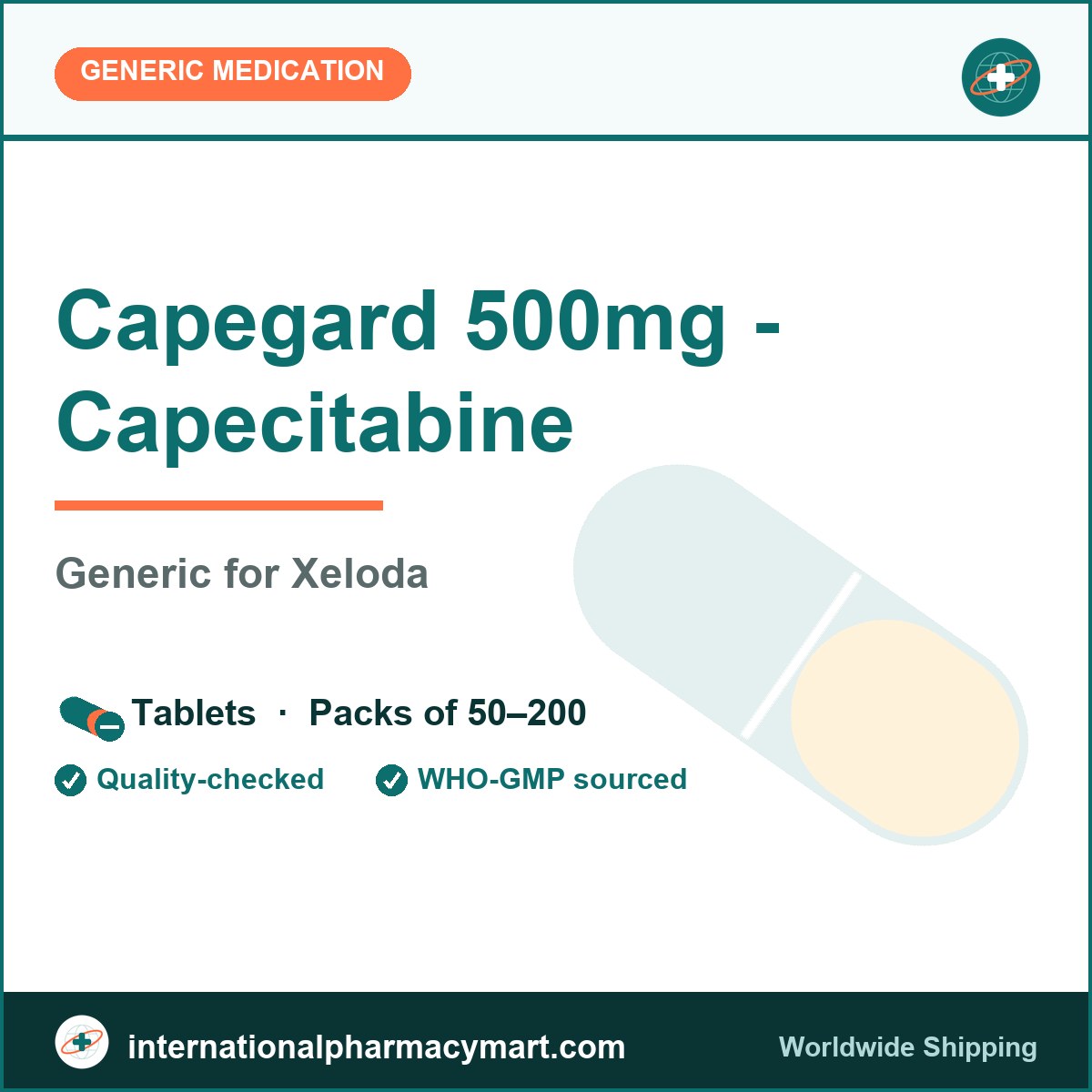
Capegard 500 Tablet contains capecitabine 500mg. It is made by Cipla and is a generic version of Xeloda. It is an anticancer medicine used to treat colon and rectal (colorectal) cancer and breast cancer, alone or with other anticancer medicines as part of chemotherapy.
- Capecitabine 500mg per tablet
- 10 tablets per strip
- For colorectal and breast cancer
- Take within 30 minutes after a meal
- Only under a cancer doctor’s care
Uses
- Cancer of the colon and rectum: it is used to control the disease and shrink tumors. It can also help lower the risk of the cancer coming back after treatment.
- Breast cancer: especially when other treatments have not worked. It helps slow cancer cell growth, shrink tumors and may reduce the chance of the cancer spreading further.
Your doctor may also use it for other types of cancer. See more anticancer medicines.
How it works
Capecitabine is an anticancer medicine of the antimetabolite group. Inside the body it is turned into 5-fluorouracil, which blocks cancer cells from making their genetic material (DNA and RNA). This slows the growth of cancer cells and eventually kills them.
Dosage
Your doctor decides the dose and treatment schedule based on the type and stage of your cancer and how you respond. Take it exactly as prescribed.
- When: within 30 minutes after a meal.
- How: swallow the tablet whole with water. Do not chew, cut or crush it.
- Cycles: it is usually given in 21-day cycles — 14 days of tablets, then 7 days of rest — but follow your own doctor’s schedule.
- Do not stop taking it unless your doctor tells you to.
Safety warning
- Pregnancy: do not take it if you are pregnant — it can harm an unborn baby. Use effective birth control during treatment and afterward (women 6 months, men 3 months after the last dose).
- Breastfeeding: do not breastfeed during treatment — it may be toxic to the baby.
- DPD deficiency: tell your doctor if you have a known lack of the enzyme dihydropyrimidine dehydrogenase (DPD).
- Blood thinners: taken with warfarin it can cause serious bleeding. Your doctor must monitor you closely.
- Infections and blood counts: it can lower blood cell counts, raising the risk of infection, bleeding or anemia. Tell your doctor at once about fever, sore throat, rash or severe diarrhea.
- Kidney: use with caution; the dose may need to change. It is not recommended in severe kidney disease. Liver: use with caution; the dose may need to change.
- Heart: tell your doctor if you have heart problems.
- Driving: it can make you dizzy or tired. Do not drive or do anything that needs focus until you know how it affects you.
- Alcohol: it is not known whether alcohol is safe with this medicine. Ask your doctor.
Side effects
Common side effects include:
- Nausea
- Vomiting
- Diarrhea
- Tiredness (fatigue)
- Abdominal pain
- Anemia (low red blood cells)
- Hand-foot syndrome (redness, swelling or pain in palms and soles)
- Dermatitis
- Hair loss
- Increased bilirubin in the blood
Tell your doctor right away if you have diarrhea, vomiting, nausea, mouth sores, chest pain or loss of appetite.
Interactions
- Warfarin and other blood thinners: risk of serious bleeding — close monitoring needed.
- Natalizumab: do not take together.
- White-blood-cell boosting injections (pegfilgrastim, sargramostim, lenograstim, molgramostim): your doctor will time these around your capecitabine doses.
Tell your doctor about all the medicines you take, as some can interact with capecitabine and cause serious side effects.
Pregnancy & breastfeeding
Pregnancy: it can harm an unborn baby and should be avoided during pregnancy. Both men and women should use effective birth control as described above.
Breastfeeding: it is unsafe during breastfeeding — data suggest it may be toxic to the baby.
Storage
Store as directed on the pack. Keep out of the reach of children.
Pack sizes & prices
| Pack | Price per tablet | Pack price |
|---|---|---|
| 50 Tablets | $4.25 | $212.50 |
| 100 Tablets | $3.99 | $399.00 |
| 150 Tablets | $3.68 | $552.00 |
| 200 Tablets | $3.11 | $622.00 |
See our shipping policy for delivery times and costs, and how ordering works. Browse all medications.
FAQs
How should I take Capegard 500?
Take it within 30 minutes after finishing a meal. Swallow it whole with water — do not cut or crush it. If you cannot swallow the whole tablet, talk to your doctor; if it has to be crushed or cut, this should be done by a trained professional using the right safety equipment.
How long do I need to take it?
It depends on your illness and how you respond. It is usually given in treatment cycles of 21 days: 14 days of tablets followed by 7 days of rest. Keep taking it for as long as your doctor prescribes.
Do I need birth control while taking it?
Yes. It can harm an unborn baby. Women should use birth control during treatment and for 6 months after the last dose. Men whose partners could become pregnant should use effective birth control during treatment and for 3 months after the last dose.
Does it make you tired?
Yes. Tiredness and weakness are among the most common side effects, so it may affect your ability to drive or use machines.
Can I take it with blood thinners like warfarin?
Only under close medical supervision. Capecitabine can interfere with warfarin and cause serious, even fatal, bleeding — the risk is higher in people over 60. Get help right away for unusual bleeding, vomiting blood or material like coffee grounds, black or tarry stools, blood in the urine, red or dark-brown urine, or easy bruising.
What kind of drug is it?
It is an anticancer (antineoplastic) chemotherapy drug of the antimetabolite type. It is not active itself: after it is absorbed, the body turns it into an active anticancer medicine, more in tumor tissue than in normal tissue.
Which tests will I need?
Your doctor will check you regularly, with blood tests for your complete blood count (CBC) and your kidney and liver function.
Source: product information for Capegard 500 Tablet (capecitabine 500mg, Cipla). Always read the leaflet in your pack. This page is for information only and does not replace advice from your doctor or pharmacist.
Reviews
There are no reviews yet.